
Diesel, Fertiliser and Economic Survival
Diesel oil and nitrogen fertiliser have long been used to make an explosive mix. They provide fundamental building blocks for an economy, for transportation, military defence and food production. Lack of them can cause a different kind of reaction – a meltdown of the economy.
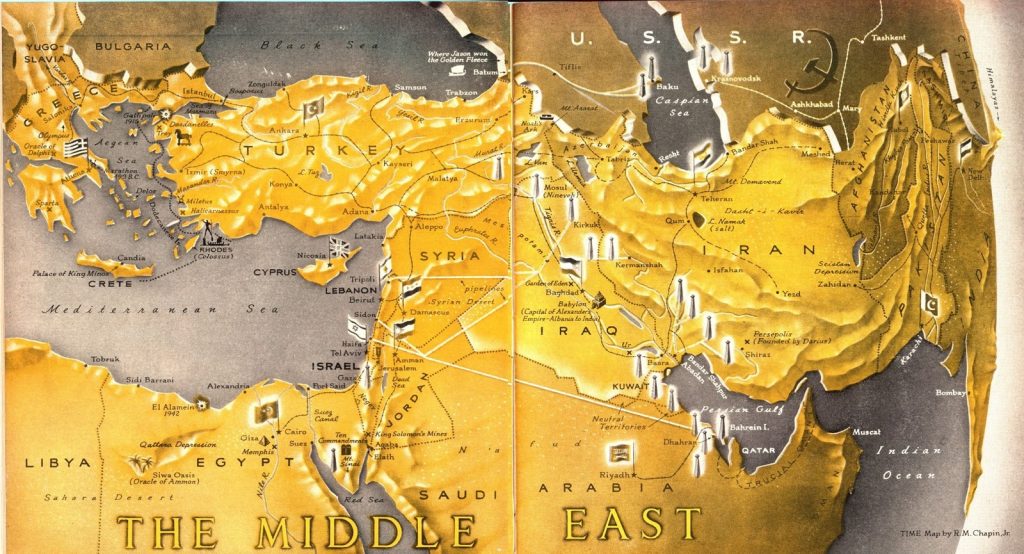
These two ingredients are crucial imports for the Australian economy from the Persian Gulf. Supply is now being blocked by an illegal war, as is helium, a crucial element in many industrial processes. The Persian Gulf countries supply about 20 percent of oil and refined products, 25 percent of LNG and 35 percent of fertilisers globally.
Australians use the equivalent about one million barrels of oil each day, for diesel, petrol and jet fuel. Ninety percent is imported and much of this from the Persian Gulf via refineries in Malaysia, Singapore and South Korea. The most crucial fuel is diesel, as our heavy transport, industry and agricultural systems run on this fuel. Fertiliser supply is also in dire straits, with 7.9 million tonnes out of consumption of 8.7 million tonnes annually imported in 2024.
Australia’s dangerous fuel dependence

Both Labor and LNP governments have been warned over many years by energy experts that we have insufficient onshore reserves. Our three remaining refineries can only provide about 20 percent of consumption. The current globalised, “just in time” supply system was justified as being the most efficient — meaning cheapest — option. But most supplies of crude oil or refined products come via two choke points, the blocked Strait of Hormuz and the Malacca Strait.
These warnings come from groups such as Engineers Australia, motoring organisations such as the NRMA, and think-tanks such as The Australia Institute. A study by The Australia Institute in 2022 found that “Australia had an average of only 32 days of consumption cover of refined fuel”.
The current policy makes quick access to processed fuel in an emergency such as war almost impossible, as oil reserve-owning countries, or those doing most of the refining, prioritise their own use as stocks run low.
Geopolitics behind the conflict
Why have the US and Israeli administrations now created this major conflict? We were told it was about regime change and then control of nuclear fuel and potential nuclear bomb making by Iran. For the US, it is primarily about control of oil supply to China, whose economy is now dominating the globe.
It also aligns with the US administration’s policy to “drill baby drill” and push ahead with expansion of fossil fuel production in America, at the expense of addressing climate change via renewable energy technologies. The main beneficiaries are the US oil and gas industries, US weapons manufacturers, and also Russia, as demand for Russian oil and gas expands.
China’s rise and America’s declining dominance
The USA’s hegemony since World War II has been maintained by its military and economic might, and the use of the US dollar as the predominant trading and reserve currency. This is closely linked to its control of oil and gas production and distribution, particularly in the Middle East.
However, this is changing as China’s economy now dominates globally through long-term strategic planning, rapid technological development and a huge internal market. China now leads in the manufacture of critical minerals and clean energy technologies. This includes solar panels, wind turbines, batteries, electric transport, high-speed rail, and potentially advanced AI and semiconductor technologies.
However, the world still depends on oil to run global transportation and military systems. Hence, control of oil remains a potentially powerful geopolitical tool.
Can the United States control global oil supply?
This appears to be the Trump Administration’s goal in “making America Great Again” and containing China. By attempting to take control of Venezuelan oil, and now Iranian oil, and maximising influence over Middle Eastern oil, the US administration could potentially block a significant proportion of oil supply to China.
However, there are major limitations:
- The US produces only around 13–15 percent of global oil production.
- It has only about 16 percent of global refining capacity.
- It possesses fewer than one percent of the world’s oil tankers.
- China dominates global shipbuilding and has a vastly larger tanker fleet.
- The US still imports substantial oil for domestic use.
- Much US oil production is shale oil, with lower net energy returns and higher costs.
In addition, increasing global trade in currencies other than the US dollar is weakening American economic dominance.
Limits of military intervention
Attempts to control oil-rich regions such as Venezuela and Iran are unlikely to succeed long term. Venezuelan oil is expensive and difficult to process, while infrastructure has badly deteriorated. Maintaining military control over distant regions also creates enormous financial and human costs.
The more likely outcome is prolonged conflict similar to Vietnam, Iraq and Afghanistan, with significant costs to taxpayers and little strategic success.
What this means for Australia
The implications for Australia are severe. Analyses from the International Energy Agency and political economists suggest ongoing fuel price rises and potential fuel rationing are real risks.
Oil-importing countries will increasingly compete for limited supply. This will continue to drive up transport, food and industrial costs across the Australian economy, worsening the cost-of-living crisis.
Fossil fuel influence on Government policy
The transition away from fossil fuels has been slowed by the political influence of the fossil fuel industry. The industry donates heavily to major political parties and continues to receive billions in subsidies globally and within Australia.
The Queensland Government’s royalty deferrals for the Adani coal operation are one example. According to The Australia Institute, fossil fuel subsidies in Australia totalled $14.5 billion in 2023–24 alone.
These are public funds that could instead support health, housing, education and ecological restoration.
The energy security solution
The Labor Government argues that it currently has fuel supplies under control through international bargaining arrangements, including LNG exports to Asian nations in exchange for fuel security.
Labor is also pushing electrification of transport and renewable energy expansion to reduce oil dependence. This is arguably the only long-term pathway to energy security, because aggressors cannot blockade the wind or the sun.
By contrast, proposals to expand domestic oil production through shale oil and oil shale extraction face major economic and environmental obstacles. These resources are more expensive, more polluting and provide lower net energy returns.
Renewable energy as the long-term path forward
According to the International Energy Agency, long-term energy security depends on renewable energy, electrification and energy efficiency measures rather than deeper dependence on fossil fuels.
Australia’s challenge is not simply securing the next shipment of diesel or fertiliser. It is deciding whether to remain trapped in an increasingly unstable fossil fuel economy or accelerate the transition toward resilient, renewable and locally powered systems.
Trebor Berrill
Sustainable Energy Systems Engineer/Educator
Editor’s note

Trevor Berrill spoke about the Middle East conflict and its implications for energy transition at the April 2026 Redlands Town Hall meeting.
Trevor’s presentation was well received and promoted much discussion at the meeting.
He has kindly provided this article so that others can consider his views on this important topic.
Further reading
Trevor Berrill has provided some further reading material relevant to his article:
ABC News (19 Aug 2025). Adani Royalty Holiday
ABC News (11 Apr 2026). How Australia is navigating an oil market in crisis
Aljazerra New (16 Jan 2026). Venezuelan Oil and US refineries
American Fuel and Petroleum Manufacturers (AFPM). US Oil Imports
Asia Pacific Foundation of Canada (APFC). Canada diversifying oil exports
Charting the Globe (2025). Number of Oil Tankers by Country
Clean Technica. Venezuelan Oil Quality
Cleveland, C.J. & Connor, P.A. (2011). Energy Return on Investment (EROI) of Oil Shale. Sustainability 2011, 3, 2307-2322; doi:10.3390/su3112307
CNN Business Report (16 Jan 2026). Oil Reserves Trump and Iran
Construction Physics. China’s Shipbuilding Capacity. How China Became the World’s Biggest Shipbuilder
CSIRO GenCost Report (2024-25). https://www.csiro.au/en/news/All/News/2024/December/GenCost-2024-25-Draft-Report-released-for-consultation
Forbes (26 Mar 2025). Why War Is One Of The World’s Biggest Climate Threats
Forbes (10 Feb 2026). Huge Challenges Remain One Month After US Takeover Of Venezuelan Oil
McKinsey. Shipbuilding Capacity of America
Politico (30 May 2025). Does Trump Actual Think He’s God?
Politico (3 Feb 026). 5 charts show China’s oil dilemma after US strikes
SBS (18 Mar 2026). ‘Cashing in big time’: Who’s profiting from the war in the Middle East?
The Australia Institute (TAI)(2024). Royalty and Tax Avoidance of the Fossil Fuel Industry
The Australia Institute (TAI) (2022) – Over a Barrel: Addressing Australia’s Liquid Fuel Security
Visual Capitalist (3 Mar 2026). Charted: Oil Trade through the Strait of Hormuz by Country